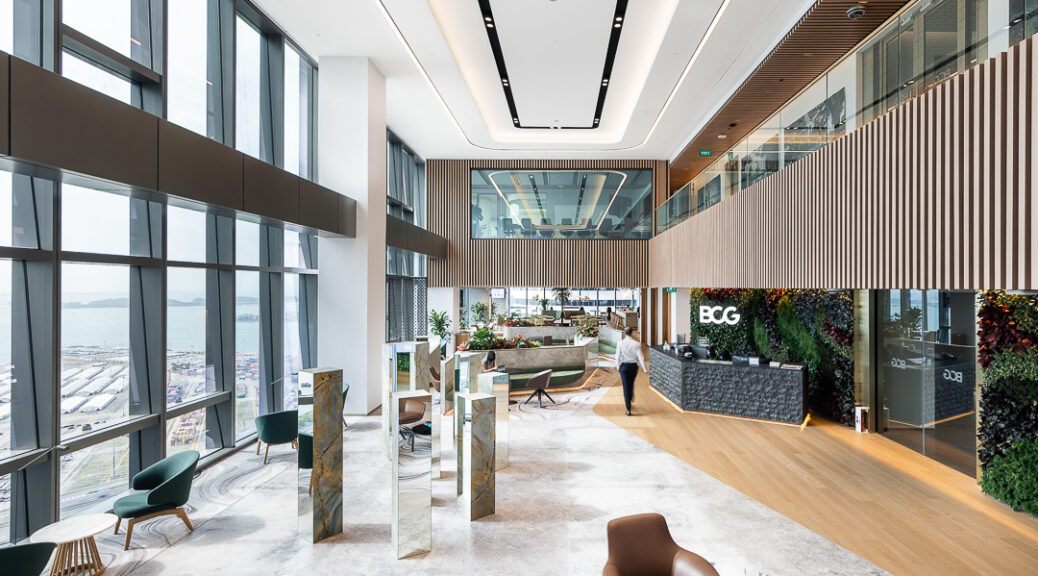
If you’ve ever tried to take a photo of a newly finished office in Tanjong Pagar or Raffles Place, you know the struggle. You spend millions on a fit-out and renovation, but in photos, the glass walls are covered in reflections, the ceiling lights make everything look like a hospital, and the vast open layout feels weirdly empty.
As an interior photographer in Singapore, I spend most of my time in these commercial spaces. Residential is one thing, but corporate interiors are a different beast entirely. Here’s a bit of what goes on behind the lens to make a workspace actually look inviting.
Dealing with the “Green” Ceiling Glow
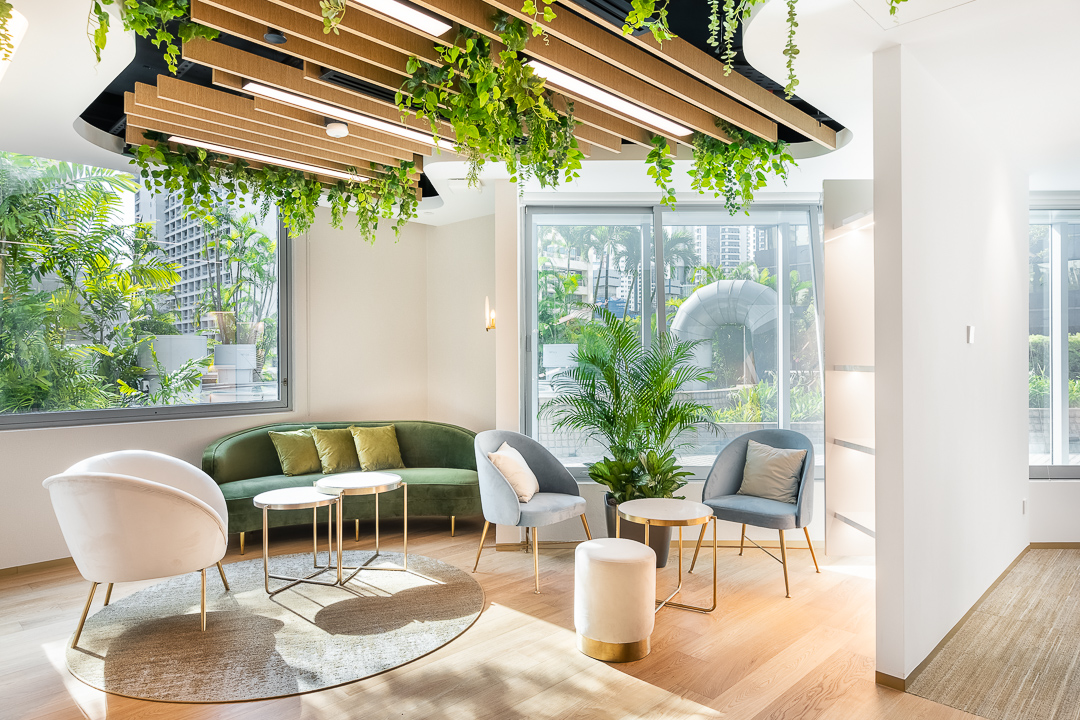
Most Singapore offices use those standard 4000K fluorescent panels. They are great for productivity but terrible for photos. They turn everything a sickly greenish-yellow. My first move? I usually kill the overheads and rely on the “accent” lighting. Those designer pendants over the pantry or the LED strips in the huddle rooms. It adds depth and stops the office from looking like a flat, clinical box.
The Glass Partition Nightmare
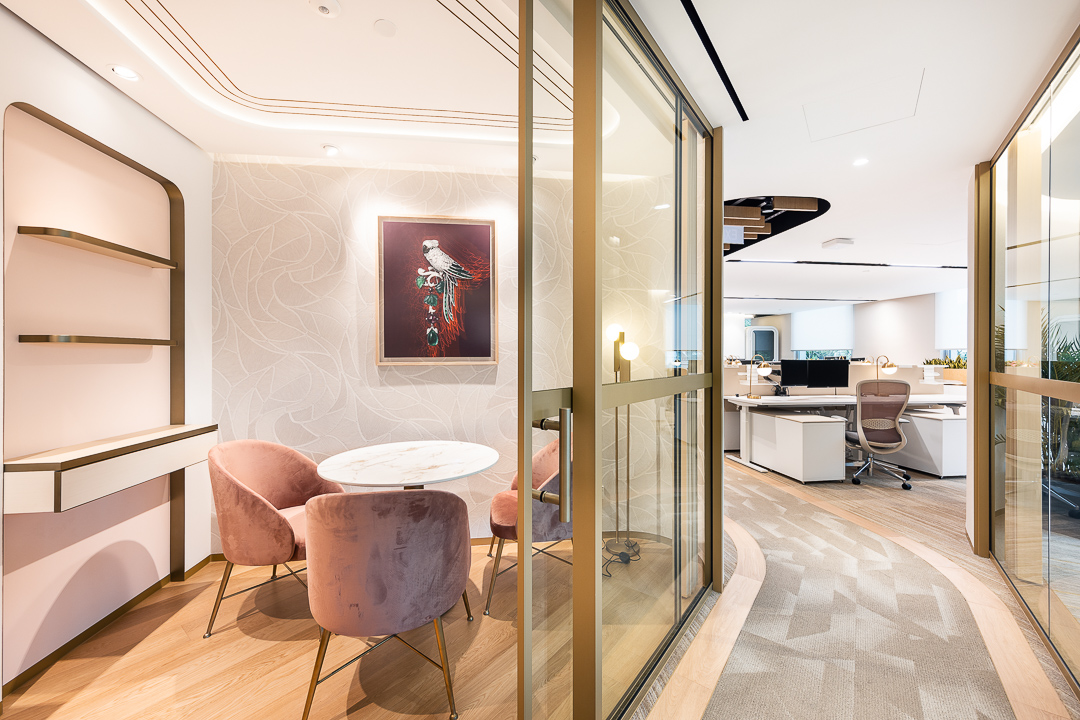
Singapore’s love affair with glass partitions is a nightmare for photography. You either see yourself in the reflection, or you see a distracting “ghost” of a fire exit sign. Instead of shooting dead-on, I’ve learned to work the angles. A slight shift in perspective, and sometimes a polarizing filter, is the difference between a messy shot and a clean, architectural one.
Why “Empty” Isn’t Always Better
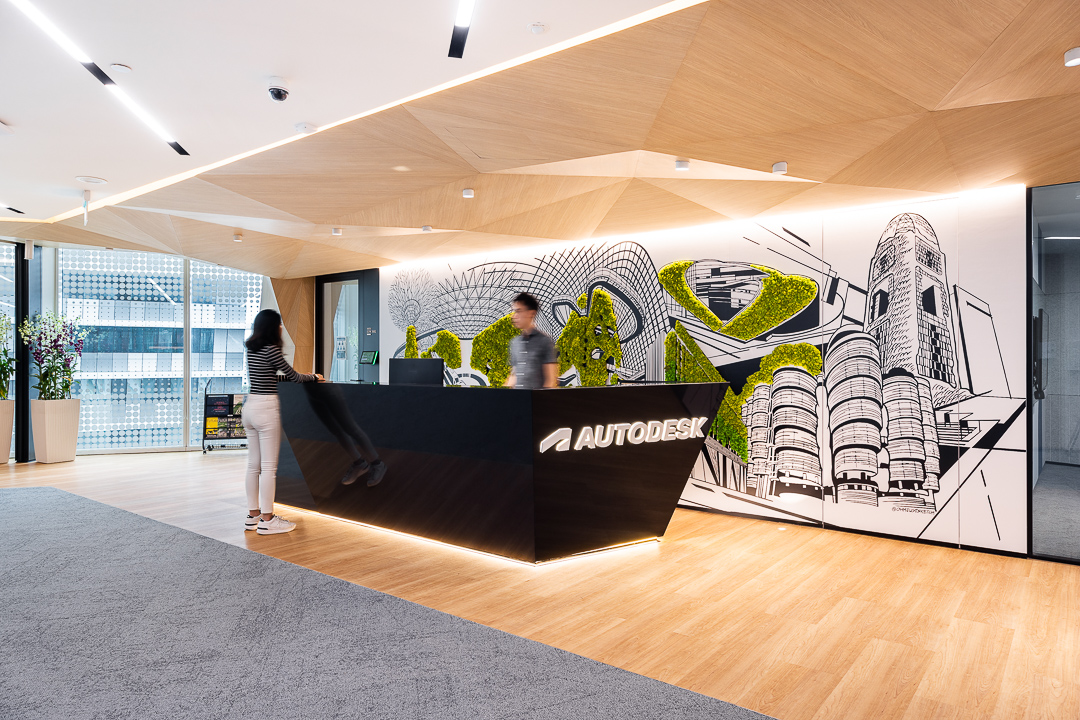
In the era of hybrid work and “Activity-Based Working,” a completely empty office can feel a bit soulless. When I’m shooting for a design-and-build firm, I like to introduce a bit of “ghosting” by using a slow shutter speed so a staff member walking through the breakout zone becomes a soft blur. It proves the space actually works for humans without the photo looking like a stiff, staged stock image.
It’s All in the Verticals
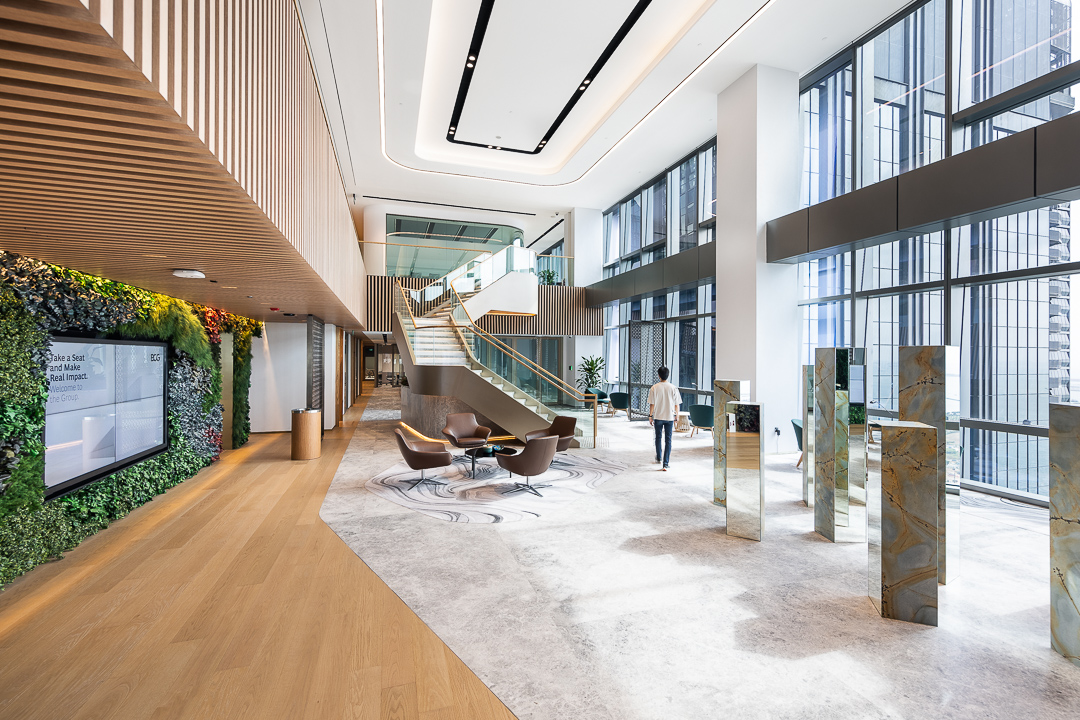
This is the “pro” giveaway. If your camera is tilted even slightly up or down, the walls of that expensive boardroom will look like they’re falling over. Keeping your vertical lines perfectly straight is the most important thing I do. It’s a technical pain in the neck, but it’s what makes a commercial portfolio look high-end rather than just a quick snapshot.
Let’s Level Up Your Portfolio
Whether it’s a tech HQ in One-North or a boutique studio in a shophouse, don’t let a bad photo ruin a great design. If you need an interior photographer in Singapore who actually understands the nuances of commercial light and space, let’s chat.
Reach out at [email protected]
See the rest of our work at miltontan.com/photography